Showing posts with label ANS. Show all posts
Showing posts with label ANS. Show all posts
- Block only the muscarinic receptors in the PNS and cholinergic receptors in the SNS
- Act by competing with acetylcholine for the muscarinic acetylcholine receptor sites
- Do not block the nicotinic receptors
- Actions:
- ↓ GI activity
- ↓ urinary bladder tone & function
- dilate pupils
................................................................................................................................................
Indications:
- decrease secretions before anesthesia
- treat parkinsonism (by blocking the stimulating effects of acetylcholine)
- restore cardiac rate & BP s/p vagal stimulation during surgery
- relieve brady s/p hyperactive carotid sinus reflex
- relieve pylorospasm & hyperactive bowel
- prevent S&S of motion sickness & vomiting
- relax biliary and ureteral colic
- relax bladder detrusor muscles & tighten sphincters
- help to control crying or laughing episodes in pt w/ brain injuries
- relax uterine hypertonicity
- help in the management of peptic ulcer
- control rhinorrhea associated with hay fever
- antidote for cholinergic drugs and for poisoning by certain mushrooms
- ophthalmic agent to cause mydriasis or cycloplegia in acute inflammatory conditions
Contraindications:

3. Glycopyrrolate (Robinul)
- adjunct therapy in Tx ulcers
4. Propantheline (Pro-Banthine)
- adjunct in Tx ulcers
5. Scopolamine (Transderm Scop)
- dec N/V associated w/ motion sickness
6. Tiotropium (Spiriva)
-Tx bronchospasm/COPD
Nursing Mgmt
- dry lots of fluids
- avoid hot temperatures
- safety precautions for dizziness/blurred vision
- glaucoma
- stenosing peptic ulcer
- intestinal atony, paralytic ileus, GI obstruction
- severe ulcerative colitis
- toxic megacolon
- prostatic hypertrophy, bladder obstruction
- cardiac arrhythmias, tachycardia, myocardial ischemia
- impaired liver or kidney function
- myasthenia gravis (Low doses of atropine sometimes used in MG to block unwanted GI & CV effects of the cholinergic drugs used to treat it)
Caution:
Adverse Reactions:
- pregnancy & lactation
- HTN
- spasticity, brain damage
Adverse Reactions:
- Weakness, dizziness, insomnia, mental confusion, excitement
- blurred vision, pupil dilation (w/ photophobia, cycloplegia, ↑ IOP)
- Dry mouth, altered taste perception
- possible tachycardia & palpitations
- Urinary hesitancy and retention
- nausea, heartburn, constipation, bloated feelings, paralytic ileus
- ↓ sweating & an ↑ predisposition to heat prostration
Interactions:
Kinetics:
- ↑ effects w/ antihistamines, antiparkinsonism drugs, MAOIs, tricyclic antidepressants (all have anticholinergic activity)
Kinetics:
- Well absorbed & Widely distributed throughout the body
- excreted in the urine
- Crosses blood brain barrier
................................................................................................................................................
Drugs:
1. Atropine
Actions:
Indications:
AE:
- Depresses salivation and bronchial secretions
- Dilates the bronchi
- Inhibits vagal responses in the heart
- Relaxes the GI & GU tracts
- Inhibits GI secretions
- Causes mydriasis
- Causes cycloplegia (paralysis ciliary muscles)
Indications:
- ↓ secretions (before surgery)
- bradycardia
- pylorospasm, ureteral colic, relaxing of bladder
- emotional lability with head injuries
- antidote for cholinergic drugs
- pupil dilation
- Parkinsonism
AE:
- Blurred vision, Mydriasis (pupil dilation), Cycloplegia (↓ accommodation reflex), Photophobia
- Palpitations, bradycardia
- Dry mouth, altered taste perception
- Urinary hesitancy & retention
- ↓ sweating (predisposition to heat prostration)
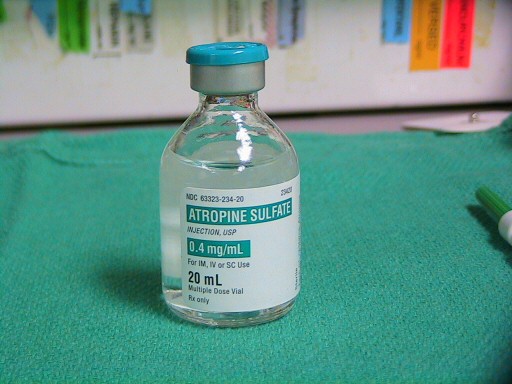
2. Dicyclomine
- relaxes GI tract; Tx hyperactive or irritable bowel
- relaxes GI tract; Tx hyperactive or irritable bowel
3. Glycopyrrolate (Robinul)
- adjunct therapy in Tx ulcers
4. Propantheline (Pro-Banthine)
- adjunct in Tx ulcers
5. Scopolamine (Transderm Scop)
- dec N/V associated w/ motion sickness
6. Tiotropium (Spiriva)
-Tx bronchospasm/COPD
................................................................................................................................................
- Assess & monitor:
- CV & Respiratory
- CNS (LOC, orientation, reflexes)
- GI (Constipation)
- GU (Urinary retention)
- Renal
- Monitor for dry mouth & difficulty swallowing
- elderly & children more susceptible to adverse effect - reduce dose (constipation, urinary retention, heat intolerance, and confusion)
- BUT don't use Dicyclomine w/ kids
- Teaching:
- dry lots of fluids
- avoid hot temperatures
- safety precautions for dizziness/blurred vision
................................................................................................................................................
Anticholinergics
- React with acetylcholinesterase preventing Ach from breaking down – results in ↑ Ach
- May bind reversibly or irreversibly
- Irreversible:
- Being developed to as nerve gas to be used as weapons
- War setting – antidote readily available
................................................................................................................................................
Indications:- Myasthenia gravis (autoimmune disease of progressive muscle weakness / lack of muscle control)
- Alzheimer's (there is a progressive loss of ACh-producing neurons & their target neurons)
Contraindications:
Caution:
Adverse Reactions:
Nursing Mgmt
Atropine; works in CNS
Adverse Effects

- Allergy
- Bradycardia
- Intestinal or urinary tract obstruction
- Lactation
Caution:
- Any condition that could be exacerbated by cholinergic stimulation
- Asthma, CAD, PUD, arrhythmias, epilepsy, or parkinsonism
Adverse Reactions:
- Bradycardia, Hypotension
- Bronchoconstriction
- ↑ bladder tone
- ↑ GI secretions & activity
- Relaxation of GI & GU sphincters
- Pupil constriction (miosis)
Interactions:
Kinetics:
- ↑ risk GI bleed if used w/ NSAIDs
- ↓ anticholinesterase effects if taken w/ any cholinergic drugs because these work in opposition to each other
- ↑ theophylline levels w/ tacrine
Kinetics:
- Well absorbed and distributed throughout the body
- Metabolized in the liver and excreted in the urine
................................................................................................................................................
Drugs to Treat Myesthenia gravis:
1. Neostigmine (Prostigmine) - works at neuromuscular junction
2. Pyridostigmine (Regonol, Mestinon) - longer duration than neostigmine
3. Ambenonium (Mytelase) - only PO; cannot be used if patient is unable to swallow
4. Edrophonium (Tensilon, Enlon) - diagnostic agent for myasthenia gravis
................................................................................................................................................
Drugs to Treat Alzheimer's:
1. Tacrine (Cognex) - 1st drug out there to treat Alzheimer's
2. Galantamine (Reminyl) - used to stop Alzheimer's progression
3. Rivastigmine (Exelon) - available in solution for swallowing ease
4. Donepezil (Atricept) - once-a-day dosing!
................................................................................................................................................
Nursing Mgmt
- if IV administer slowly
- Atropine sulfate on-hand in case of crisis (antidote)
- Observe for excessive salivation, diarrhea, emesis, excessive urination
- should be taken w/ meals
- Prevent injury
- Teaching
................................................................................................................................................
Nerve Gas – Irreversible Indirect Cholinergic Agonist:
Antidotes:
- Irreversible acetylcholinesterase inhibitor
- Leads to toxic accumulation of ACh at cholinergic receptor sites
Antidotes:
Pralidoxime (Protopam Chloride); works in PNS
- IM or IV
- frees up acetylcholinesterase to start breaking down ACh
- on-hand for MG receiving an IDCA
- antidote for irreversible acetylcholinesterase-inhibiting drugs, or nerve gas
- Organophosphate pesticide poisoning
Atropine; works in CNS
- Block cholinergic activity & active Ach in CNS
- Activate Acetylcholinesterase to breakdown Ach
Adverse Effects
- Blurred vision, dizziness, diplopia, headache, hyperventilation
- Can cause parasympathetic crisis and muscle paralysis
Indirect-Acting Cholinergic Agnoists
- Chemicals that act at the same site as the neurotransmitter acetylcholine (ACh)
- Similar response as parasympathetic system activation - Effects are widespread
- These drugs usually stimulate muscarinic receptors in PNS
- used as systemic agents used to:
- ↑ bladder tone, urinary excretion, & GI secretions
- also used as ophthalmic agents to induce miosis to relieve ↑ IOP of glaucoma via pupil constriction (not systemic when used ophthalmically)
- ↓ HR, ↓ myocardial contractility, bronchoconstriction & ↑ bronchial mucous secretion
- also used as ophthalmic agents to induce miosis to relieve ↑ IOP of glaucoma via pupil constriction (not systemic when used ophthalmically)
- ↓ HR, ↓ myocardial contractility, bronchoconstriction & ↑ bronchial mucous secretion
................................................................................................................................................
Contraindications:
Caution:
Adverse Reactions:
3. Cevimiline (Exovac)
- Tx dry mouth
4. Pilocarpine (Salagen)
- Tx dry mouth (xerostomia) s/p radiation therapy of head & neck tumor
Nursing Mgmt
Baseline Assessment:
- Any condition that would be exacerbated by parasympathetic effects—bradycardia, hypotension, CAD
- PUD, intestinal obstruction or recent GI surgery
- Asthma
- Bladder obstruction
- Epilepsy & parkinsonism
Caution:
- pregnancy / lactation
- N/V, diarrhea, cramps, involuntary defecation
- Bradycardia, heart block, hypotension
- Urinary urgency
- Flushing, ↑ sweating & salivation, swallowing difficulty
Interactions:
Kinetics:
- ↑ risk of cholinergic effects if these drugs are combined or given with acetylcholinesterase inhibitors
Kinetics:
- Well absorbed and have relatively short half-life (1-6 hr)
- Metabolized; excretion of these drugs is not known
................................................................................................................................................
Drugs:
1. Bethanechol (Duvoid, Urecholine)
- urinary retention
- urogenic bladder
- esophageal reflux in infants/kids
Mgmt:

Mgmt:
- Produces muscarinic effects primarily on GI tract & urinary bladder
- ↑ tone & peristaltic activity of esophagus, stomach, and intestine
- contracts detrusor muscle of urinary bladder, usually enough to initiate micturition.
- cant help if obstructed
- must monitor for effectiveness - i.e are they having problem still w/ urinary retention? (relief should be quick)
- if not working, could be structural problem (BUN & Cr will go way up)

2. Carbachol (Miostat)
- induces miosis to ↓ IOP
- induces miosis to ↓ IOP
3. Cevimiline (Exovac)
- Tx dry mouth
4. Pilocarpine (Salagen)
- Tx dry mouth (xerostomia) s/p radiation therapy of head & neck tumor
- glaucoma (constricts pupil & ↓ IOP)
................................................................................................................................................
Baseline Assessment:
- Cardiovascular - HR, BP CAD
- GI - Bleeding, ulcer disease, obstruction, dehydration
- Respiratory assessment - Asthma
- GU - Recent bladder surgery or obstruction
- CNS - Parkinson’s and/or epilepsy
Direct-Acting Cholinergic Agonists
- Do not usually block beta-2 receptor sites, including sympathetic bronchodilation
- Preferred for patients who smoke or have asthma, obstructive pulmonary disease, or seasonal / allergic rhinitis
Indications
- HTN
- angina
- some cardiac arrhythmias
- open-angle glaucoma
Contraindications
- brady, heart block
- shock, CHF, hypotension
Cautions
- COPD
- DM, thyroid disease
Adverse Effects
- CNS: Fatigue, dizziness, sleep disturbances
- CV: Bradycardia, heart block, CHF, hypotension
- Resp: Sx in resp tract (range from rhinitis to bronchospasm)
- GI: N/V, diarrhea
- ↓ libido and impotence
Kinetics
- absorbed from GI
- metabolized in liver and are excreted in the urine
................................................................................................................................................
DrugsAtenolol (Tenormin)
- Tx MI, angina
- most used drug in its class for HTN
................................................................................................................................................
Drug Interactions
- ↓ HTN effects w/ clonidine, NSAIDs, rifampin
- ↑ toxicity IV lidocaine if given w/ these drugs
- ↑ risk orthostatic hypotension w/ prazosin
................................................................................................................................................
Nursing Mgmt for All A&B Agonists
- Check apical pulse before PO admin, esp. in pt receiving digitalis (both drugs slow AV conduction)
- If < 60 bpm, withhold dose & consult physician
- Monitor apical pulse, BP, respirations, & peripheral circulation throughout dosage adjustment period. Consult physician for acceptable parameters.
- Sudden d/c of drug can exacerbate HTN, angina, & precipitate tachycardia or MI in pt w/ CAD, & thyroid storm in pt w/ hyperthyroidism – due to being hypersensitive to catecholamines
Beta-1 Selective Blockers
- competitively block beta receptors in SNS
- its therapeutic effects caused by beta-block in heart & juxtaglomerular apparatus
- (-) inotrope, (-) chronotrope, (-) dromotope
- this leads to ↓ arrhythmia, ↓ cardiac workload, ↓ O2 consumption
- & dec BP b/c juxtaglomerular cells not stimulated to secrete renin
- drugs ending in -olol
Indications
- Tx cardiac conditions – HTN, angina, migraine headaches, preventing re-infarction after MI
- off label: anxiety/stage fright
Contraindications
- brady, heart block, shock, CHF
- COPD/asthma (blocks dilation)
Cautions
- diabetes (blocks normal S&S of hyper-/hypoglycemia)
- thyrotoxicosis (b/c blocking effects on thyroid gland)
- hepatic dysfunction
Adverse Effects
- brady, heart block, hypotension, arrhythmia, HF
- bronchospasm, cough
- fatigue, dizziness
- sleep disturbance, depression
- N/V, diarrhea
- ↓ labido, dysuria
- ↓ exercise tolerance / can no longer "get-up-and-go"
Kinetics
- Well absorbed from GI tract
- Metabolized in the liver
Drugs
1. Propranolol (Inderal)
- Patient teaching required:
- teach pt to take pulse / take pulse before taking med
- teach pt it blocks S&S hypoglycemia
- teach about compliance &
- teach that abrupt d/c can lead to withdrawal syndrome (tremors, sweating, headache, malaise, palpitation, rebound HTN, MI, life-threatening arrhythmia)
- teach about postural hypotension

................................................................................................................................................
2. Sotalol (Betapace)- indicated for life-threatening arrhythmia & maintenance of sinus rhythm w/ AF or a-fib pt
................................................................................................................................................
Drug Interactions
- ↓ effectiveness w/ NSAIDs
- blood glucose changes w/ diabetic meds & insulin
- HTN may occur if given w/ clonidine
................................................................................................................................................
Nursing Mgmt for Nonselective Beta Blockers- if used LT, do not stop abruptly! (receptors become hypersensitive to catecholamines) – can cause rapid inc BP → MI / stroke
- should taper over 2wks
- labs: liver/kidney function, thyroid function, blood glucose
Nonselective Beta Blockers
- These work on alpha receptors
- vasodilates aka ↓ BP (alpha 1)
- & blocks NE feedback control (alpha 2)
Indications
- primarily used to prevent cell death/tissue sloughing r/t IV DA or NE extravasation/infiltration (causes local vasodilation & return of blood flow to the area)
- can be used for pheochromocytoma Dx or mgmt of severe HTN reactions s/p pheochromocytoma surgery
 CAD or MI
Nonselective Alpha Blockers
- These are non-selective drugs.
- competitively block norepinephrine at alpha & beta receptors
- called sympatholytic drugs b/c they lyse or block SNS effects to prevent S&S associated w/ sympathetic stress reaction
- ↓ HR & ↓ BP
- ↑ renal perfusion & ↓ renin levels
Indications
- primarily used to treat cardiac conditions i.e essential HTN (usually adjunct w/ diuretics)
Contraindications
- brady or heart block
- shock or CHF
- pregnancy & lactation
Cautions
- bronchospasm & resp distress
- (due to loss of NE bronchodilation effects)
Adverse Effects
- arrhythmia, hypotension, CHF
- pulm edema, bronchospasm, dyspnea
- dizziness, vertigo
- insomnia, fatigue
- N/V, gastric pain
Kinetics
- Well absorbed
- Metabolized in the liver and excreted in the urine & feces
Drugs
1. Amiodarone (Cordarone)
- antiarrhythmic agent
- reserved for emergency use
................................................................................................................................................
2. Carvedilol (Coreg)- indicated for HF, MI, HTN, left ventricle dysfunction
................................................................................................................................................
3. Labetalol (Normodyne)- indicated for HTN
- control of BP in pheochromocytoma
- used for clonidine withdrawal HTN

Nursing Mgmt for All A&B Agonists
- monitor diabetic pt closely: these drugs also mask S&S hypoglycemic & hyperglycemia
- priority for diabetic pt is to monitor glucose over pulse; priority for most pt on adrenergic blockers is to monitor pulse
- monitor vitals + blood glucose + liver/kidney function
- educate pt about AE, re-educate diabetics about glucose monitoring
- find out pt herbal drug use:
- Ginseng = ↑ anti-HTN effects (risk hypotension, CNS effects)
- Xuan shen, nightshade = ↓ HR (risk severe brady, reflex tachy)
- Celery, Xuan shen, coriander = ↓ glucose (inc risk hypoglycemia)
- Saw palmetto = ↑ risk urinary tract complications
Nonselective Alpha & Beta Blockers
- These selective for beta receptors
- ↑ heart rate (+ chronotropy), ↑ contractility (+ inotropy), ↑ conductivity (+ dromotropy)
- bronchodilation
- ↑ blood flow to skeletal muscles & splanchnic bed
- relaxes uterus
- (most drugs in this class at beta-2 selective, used to manage asthma, bronchospasm, COPD)
- drugs in this class end in -terol (exception: terbutaline)
Indications
- asthma, bronchospasm, obstructive pulm conditions
- relaxation of uterus
Contraindications
- pulm HTN
- halogenated anesthesia (sensitize heart to catecholamines)
- eclampsia, uterine hemorrhage, intrauterine death, pregnancy or lactation
Cautions
- DM, thyroid disease
- vasomotor problems
- heart disease, stroke, renal disease
Adverse Effects
- restlessness, anxiety, fear
- tachy, palpitations, angina, MI
- difficulty breathing, cough, bronchospasm
- N/V, anorexia
- may cause pulm edema, sweating, pupil dilation
- sweating, pallor
Kinetics
- Rapidly absorbed after injection
- Metabolized in the liver and excreted in the urine
- half-life usually < 1 hr
................................................................................................................................................
Drugs
1. Isoproterenol (Isuprel)
- nonspecific beta agonist
- usually reserved for emergency use due to numerous AE
- given IV or injected
Indications:
- Tx shock, cardiac standstill, heart block in transplanted hearts
- prevention bronchospasm during anesthesia
- Tx bronchospams

................................................................................................................................................
2. Albuterol (Proventil)- Tx & prevention of bronchospasm
- inhaled
................................................................................................................................................
Drug Interactions
- inc risk AE when combined w/ others meds in the same class
................................................................................................................................................
Nursing Mgmt for Beta Specific Agonists- baseline assessment of VS, ECG, UO
- labs: renal & hepatic function, blood glucose
- monitor for therapeutic & adverse effects
Nonselective Beta Agonists
- These drugs bind to alpha receptors
Adverse Effects
- CNS: anxiety, restlessness, depression, blurred vision/light sensitivty (from pupil dilation)
- CV: arrhythmia, ECG changes, BP changes
- GU: dec UO, difficulty urinating
................................................................................................................................................
Drugs1. Phenylephrine (Neo-Synephrine)
- potent vasoconstrictor – works on alpha-1 receptors
- has little to no effect on heart & bronchi
- Parenterally: shock/shock-like state, SVT, prolong local anesthesia, maintain BP during spinal anesthesia use
- Topically: ophthalmic; to ↓ IOP associated w/ glaucoma; dilates pupils during eye exam or surgery
- Nasal Spray: used topically to treat allergic rhinitis & receive Sx otitis media
- Other: Intracavernosal Phenylephedrine is the drug of choice & first line Tx of low-flow priapism b/c it has almost pure alpha effects & minimal beta activity
- essential HTN
- used in many OTC meds, may cause inadvertent OD
- fear, anxiety, restlessness
- headache, nausea, pallor
- ↓ urine formation
................................................................................................................................................
2. Midodrine (ProAmantine)
- orthostatic hypotension (non-responsive to normal therapies)
- works on alpha-1 receptors
................................................................................................................................................
3. Clonidine (Catapres)
- centrally-acting alpha-2 agonists (stimulates A2 CNS receptors)
- they are hypotensive agents – ↓ HR, inhibit NE
- indicated for essential HTN
- epidural infusion for Tx chronic pain in terminally ill adults
- can be used to treat high BP, ADHD, anxiety/panic disorders
- do not stop suddenly! - taper over 2-4 days
- fall risk (monitor BP closely - esp. w/ postural change)
- hallucinations, bad dreams
- headache, sedation, fatigue
- dry mouth, dec sexual function
- N/V, constipation
- can cause extreme hypotension, brady, HF
................................................................................................................................................
Nursing Mgmt
- Monitor VS, cardiac status, orthostatic hypotension
- do not stop abruptly! – can cause rebound HTN, arrhythmia, flushing
- must taper over 2-4 days!
- avoid extravasation

Nonselective Alpha Agonists
- promote glycogenolysis (breakdown of glycogen)
- dilate pupils, inc sweating
Indications
- Tx hypotensive shock (esp dopamine)
- bronchospasm & some types of asthma
Contraindications
- Pheochromocytoma (adrenal tumor —> inc catecholamine secretion —> major inc HR & BP)
- Tachy-arrhythmias or V-Fib
- Hypovolemia
- Halogenated hydrocarbon general anesthetics
Cautions
- PVD – could be exacerbated by systemic vasoconstriction
- pregnancy & lactation
Adverse Effects
- Arrhythmias, hypertension, palpitations, angina
- dyspnea
- N/V
- Headache, sweating
Kinetics
- Rapidly absorbed after injection or passage through mucous membranes
- Metabolized in the liver and excreted in the urine
Drugs
1. Dobutamine (Dobutrex)
- preference for B1 receptors –> therefore indicated for CHF
- it can inc myocardial contractility (+ inotrope) w/o much change to rate; does not inc O2 demand of the heart, while most other sympathomimetics do
................................................................................................................................................
2. Epinephrine (Adrenaline, Sus-Phrine)- indicated for shock, glaucoma, asthma/COPD, anaphylactic reactions
- can also prolong effects of local anesthetics
................................................................................................................................................
3. Norepinephrine (Levophed)- indicated for shock
- used during cardiac arrest (V-fib) to get sympathetic activity
................................................................................................................................................
4. Metaraminol (Aramine)- synthetic agent similar to norepinephrine
................................................................................................................................................
Big Guns:1. Dopamine (Intropin)
- Tx hypotensive shock
- ↑ HR, ↑ BP
- maintains renal perfusion (maintains UO / ↑ Na & fluid output)
Nursing Considerations for Dopamine:
- monitor BP, HR, peripheral pulses, UO
- precise measurement essential for accurate titration of dosage
- report the following to physician:
- ascending tachy, dysrhythmias, disproportionate rising diastolic (marked dec in Pulse Pressure), S&S peripheral ischemia (pallor, cyanosis, coldness, pain, numbness/burning, mottling)
- monitor for extravasions
- monitor for effectiveness -
- (loss of pallor, inc toe tmp, good cap refill, reversal of confusion)
................................................................................................................................................
2. Ephedrine (pretz-D)- Tx seasonal rhinitis, hypotensive episodes, (recreational use)
- causes cardiac stimulation, vasoconstriction, bronchodilartion
- stimulates Norepinephrine release
- crosses blood brain barrier (BBB) –> CNS stimulation –> used for narcolepsy & depression, (used illegally as sports performance enhancer)
- form of the drug (Pseudoephedrine) used as nasal decongestant
Nursing Considerations for Ephedrine
- find out pt's OTC med use / education about inadvertent overdose
- monitor AE:
- CNS: anxiety restlessness
- CV: tachy, palpitations
- GU: difficult/painful urination, acute urinary retention (esp. older men w/ prostatitis)
................................................................................................................................................
Drug Interactions
- inc effects Tricyclic antidepressants (TCAs) and MAOI’s
- MAOI inhibits monoamine oxidase which is needed to break down Epi & NE
................................................................................................................................................
Nursing Mgmt for All A&B Agonists- Monitor kidney/liver function, serum electrolytes, I&O, VS, ECG
- Herbs to avoid: Ma Huang, guarana, caffeine (↑ BP, stroke death)
- ask bout OTC cold, allergy, & diet pills use (↑ BP, stroke death)
- Avoid extravasation
- Aseptic technique when administering ophthalmic & nasal agents
- Monitor light exposure to prevent sensitivity to light from pupil dilation
- Encourage voiding prior to med admin to prevent urinary retention due to sphincter contraction
- Encourage relaxation to alleviate feelings of tension and anxiety
- Usually administered systemically for hypovolemic – hypotensive shock in an ICU (esp Dopamine) so pt needs constant monitoring
- monitor systemic effect of nose drops due to excessive dosage due to rapid absorption through nasal mucosa

Nonselective Alpha & Beta Agonists
Subscribe to:
Posts
(
Atom
)